Buy financetip.eu ?
We are moving the project
financetip.eu .
Are you interested in purchasing the domain
financetip.eu ?
domain@kv-gmbh.de · 0541-91531010
Buy financetip.eu ?
What is a temperate maritime climate?
A temperate maritime climate is characterized by mild temperatures and moderate rainfall due to the influence of the nearby ocean. This type of climate is typically found in coastal regions and is known for its relatively stable and mild weather conditions. Winters are usually mild and summers are cool, with a narrow temperature range throughout the year. The presence of the ocean helps to moderate temperature extremes and create a more stable climate. **
What is the temperate zone 2?
The temperate zone 2 is a region of the Earth located between the Tropic of Cancer and the Arctic Circle in the Northern Hemisphere, and between the Tropic of Capricorn and the Antarctic Circle in the Southern Hemisphere. This zone experiences moderate temperatures and distinct seasons, with warm summers and cool winters. It is characterized by a diverse range of ecosystems, including deciduous forests, grasslands, and some areas of Mediterranean climate. The temperate zone 2 is home to a wide variety of plant and animal species adapted to its seasonal climate. **

Similar search terms for Temperate
Top-Angebote
Products related to Temperate:
-
Penguin Rule #1: The Simple Strategy for Successful Investing in Only 15 Minutes a WeekPhil Town doesn't think so. He made a fortune, and in Rule #1 he'll show you how he did it.Rule #1:- Sets out the five key numbers that really count when you're buying stocks and shares- Explains how to use new Internet tools to simplify research- Shows how to exploit the advantages of being an individual investor- Demonstrates how to pay fifty pence for every pound's worth of business6,70 £*Shipping: 2,99 £Secure redirect to the provider
-
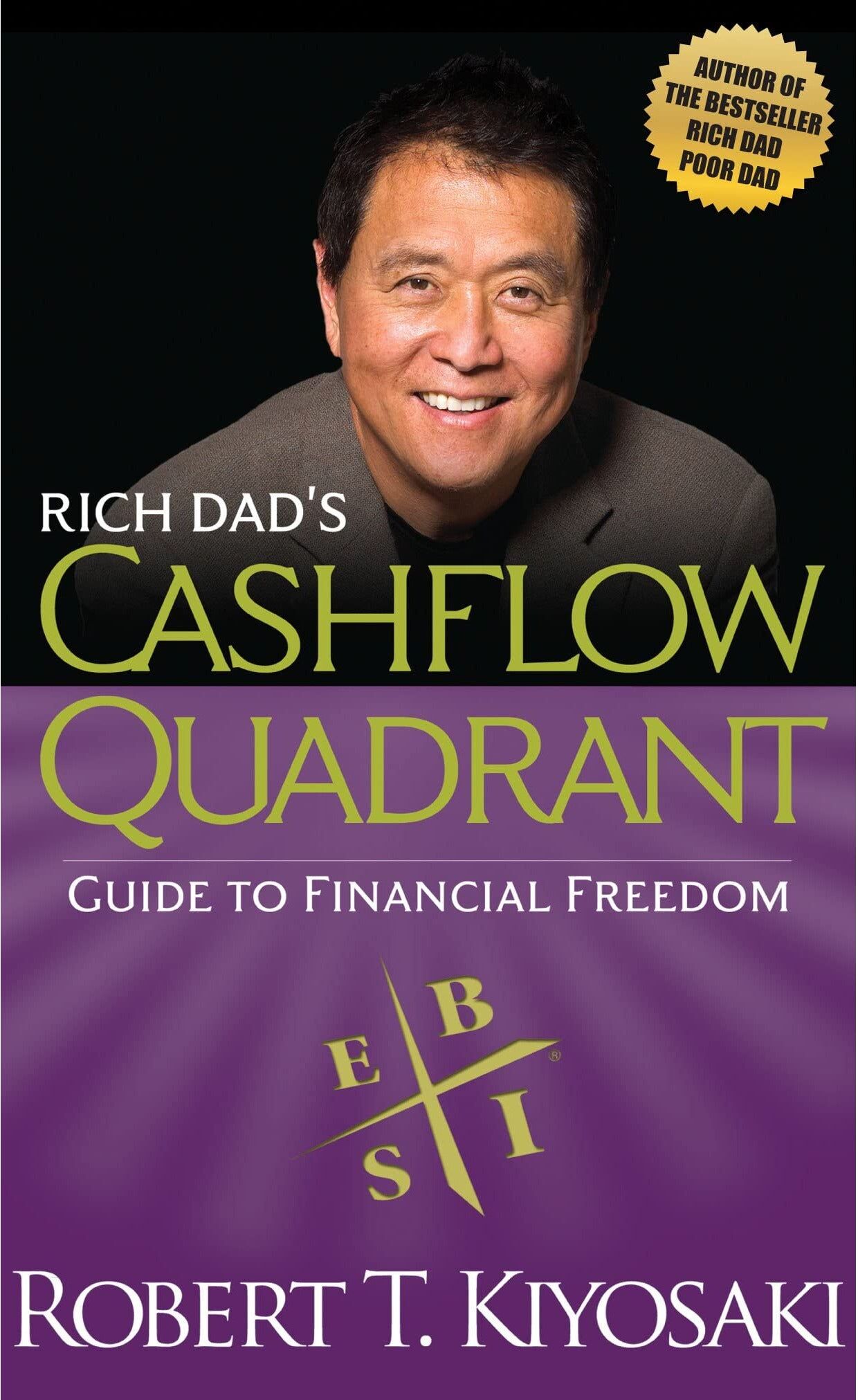
Plata Publishing Rich Dad’s Cashflow Quadrant – Robert T. Kiyosaki Guide to Financial Freedom, Investing & Wealth BuildingDiscover why some people work harder for money while others make money work for them with Rich Dad’s Cashflow Quadrant by Robert T. Kiyosaki. In this powerful follow-up to Rich Dad Poor Dad, Kiyosaki introduces the Cashflow Quadrant, a simple yet transformative framework that explains the four ways people earn income: Employee (E), Self-Employed (S), Business Owner (B), and Investor (I). The book reveals why true financial freedom is most often found on the B and I side of the quadrant. Through real-world examples and practical insights, Kiyosaki teaches readers how to shift their mindset, reduce financial risk, and build sustainable wealth through business ownership and investing. This book focuses on financial intelligence, passive income, and long-term wealth creation, rather than short-term gains. What You’ll Learn: The meaning of the Cashflow Quadrant (E, S, B, I) Why employees and self-employed people face financial limits How business owners and investors build passive income The mindset shifts required for financial independence How to move from job-based income to asset-based income Ideal for anyone serious about financial freedom, investing, and entrepreneurship, Rich Dad’s Cashflow Quadrant is a must-read personal finance classic.4,99 £*Shipping: 1,99 £Secure redirect to the provider
-
Simon & Schuster The Holy Grail of Investing: The World's Greatest Investors Reveal Their Ultimate Strategies for Financial FreedomTony Robbins, who has coached more than fifty million people from 100 countries, is the world’s #1 life and business strategist. In this new book, he teams up with Christopher Zook, a renowned financial investor who draws from thirty years of experience to round out the trilogy of #1 New York Times bestselling financial books. Together they reveal how, for decades, trillions of dollars of smart money – think of large institutions, sovereign wealth funds, individuals with ultra-high-net worth – have been making outsized returns using alternative investments in private equity, private credit, private real estate, energy and venture capital. Until recently, the vast majority of investors – those of us without insider access or eye-popping checkbooks – have been locked out of these exciting, high-yield opportunities. But there is a change underway. Alternative investments are coming to the masses, and investors need to know how to navigate their options, assess the merits of these opportunities, and determine how to best take advantage of this massive trend. In The Holy Grain of Investing, you’ll discover: Where opportunities will arise as we transition from the 'free money' era of zero interest rates to a new more realistic environment. How to take advantage of the trillions flowing into private investments by owning a piece of the firms that manage the assets. How to take advantage of private credit as an alternative (or compliment) to bonds. How and why professional sports teams have become an asset class of their own. How the renewable energy revolution will create new winners and losers. How investments in private real estate can work as an inflationary hedge. Interviews, advice, and insights from some of the world’s most formidable titans of industry, such as Howard Marks of OakTree Capital, Vinod Khosla of Khosla Capital, Barry Sternlicht of Starwood, Robert Smith of Vista, and Peter Theil of Founders Fund, among others. The market is changing, and the conventional wisdom no longer applies. Are you ready to add some fuel to your financial fire? No matter your wealth, your experience, your job, or your age, The Holy Grail of Investing will teach you everything you need to know to unleash the financial power of alternative investments.8,99 £*Shipping: 2,99 £Secure redirect to the provider



-
Which countries are located in the temperate zone?
Countries located in the temperate zone include the United States, Canada, Japan, China, Australia, Argentina, and parts of Europe such as France, Germany, and the United Kingdom. These countries experience four distinct seasons with moderate temperatures and are located between the Tropic of Cancer and the Arctic Circle in the Northern Hemisphere, and between the Tropic of Capricorn and the Antarctic Circle in the Southern Hemisphere. **
-
How does the nutrient cycle work in temperate regions?
In temperate regions, the nutrient cycle works through a series of processes that involve the movement and transformation of nutrients such as carbon, nitrogen, and phosphorus. These nutrients are taken up by plants from the soil, then transferred to animals through consumption. When plants and animals die, their organic matter decomposes, releasing nutrients back into the soil. These nutrients are then recycled and reused by plants, completing the cycle. Additionally, weathering of rocks and minerals also contributes to the availability of nutrients in temperate regions. **
-
What are the temperate zones in the mid-latitudes?
The temperate zones in the mid-latitudes are regions located between the Tropic of Cancer and the Arctic Circle in the Northern Hemisphere, and between the Tropic of Capricorn and the Antarctic Circle in the Southern Hemisphere. These zones experience moderate temperatures compared to the tropics and polar regions, with distinct seasons including warm summers and cool winters. The temperate zones are characterized by a variety of ecosystems, including deciduous forests, grasslands, and Mediterranean climates, making them highly diverse in terms of flora and fauna. **
-
What is the climate like in the temperate zone?
The climate in the temperate zone is characterized by four distinct seasons - spring, summer, fall, and winter. The temperatures in this zone are moderate, with warm summers and cool winters. The temperate zone typically experiences a good amount of rainfall throughout the year, which supports a variety of vegetation. Overall, the climate in the temperate zone is generally pleasant and conducive to a diverse range of plant and animal life. **

How are plants cultivated in agriculture in the temperate zone?
In the temperate zone, plants are cultivated in agriculture through a variety of methods. These include crop rotation, where different crops are planted in the same field in successive seasons to improve soil fertility and reduce pests and diseases. Additionally, farmers may use greenhouses or high tunnels to extend the growing season and protect plants from harsh weather. In some cases, irrigation systems are used to ensure that plants receive enough water, especially during dry periods. Finally, farmers may also use technology such as tractors and other machinery to help with planting, harvesting, and other tasks. **
Where is there uncertainty in the division of the temperate zone?
There is uncertainty in the division of the temperate zone primarily at its boundaries. The exact demarcation between the temperate zone and the tropical or polar zones can vary depending on the criteria used, such as temperature, climate, or vegetation. Additionally, with climate change and shifting weather patterns, the boundaries of the temperate zone may be subject to change over time, adding further uncertainty to its division. **
Top-Angebote
Products related to Temperate:
-
Penguin Rule #1: The Simple Strategy for Successful Investing in Only 15 Minutes a WeekPhil Town doesn't think so. He made a fortune, and in Rule #1 he'll show you how he did it.Rule #1:- Sets out the five key numbers that really count when you're buying stocks and shares- Explains how to use new Internet tools to simplify research- Shows how to exploit the advantages of being an individual investor- Demonstrates how to pay fifty pence for every pound's worth of business6,70 £*Shipping: 2,99 £Secure redirect to the provider
-
What is a temperate maritime climate?
A temperate maritime climate is characterized by mild temperatures and moderate rainfall due to the influence of the nearby ocean. This type of climate is typically found in coastal regions and is known for its relatively stable and mild weather conditions. Winters are usually mild and summers are cool, with a narrow temperature range throughout the year. The presence of the ocean helps to moderate temperature extremes and create a more stable climate. **
-
What is the temperate zone 2?
The temperate zone 2 is a region of the Earth located between the Tropic of Cancer and the Arctic Circle in the Northern Hemisphere, and between the Tropic of Capricorn and the Antarctic Circle in the Southern Hemisphere. This zone experiences moderate temperatures and distinct seasons, with warm summers and cool winters. It is characterized by a diverse range of ecosystems, including deciduous forests, grasslands, and some areas of Mediterranean climate. The temperate zone 2 is home to a wide variety of plant and animal species adapted to its seasonal climate. **
-
Which countries are located in the temperate zone?
Countries located in the temperate zone include the United States, Canada, Japan, China, Australia, Argentina, and parts of Europe such as France, Germany, and the United Kingdom. These countries experience four distinct seasons with moderate temperatures and are located between the Tropic of Cancer and the Arctic Circle in the Northern Hemisphere, and between the Tropic of Capricorn and the Antarctic Circle in the Southern Hemisphere. **
-
How does the nutrient cycle work in temperate regions?
In temperate regions, the nutrient cycle works through a series of processes that involve the movement and transformation of nutrients such as carbon, nitrogen, and phosphorus. These nutrients are taken up by plants from the soil, then transferred to animals through consumption. When plants and animals die, their organic matter decomposes, releasing nutrients back into the soil. These nutrients are then recycled and reused by plants, completing the cycle. Additionally, weathering of rocks and minerals also contributes to the availability of nutrients in temperate regions. **
Similar search terms for Temperate
-
Plata Publishing Rich Dad’s Cashflow Quadrant – Robert T. Kiyosaki Guide to Financial Freedom, Investing & Wealth BuildingDiscover why some people work harder for money while others make money work for them with Rich Dad’s Cashflow Quadrant by Robert T. Kiyosaki. In this powerful follow-up to Rich Dad Poor Dad, Kiyosaki introduces the Cashflow Quadrant, a simple yet transformative framework that explains the four ways people earn income: Employee (E), Self-Employed (S), Business Owner (B), and Investor (I). The book reveals why true financial freedom is most often found on the B and I side of the quadrant. Through real-world examples and practical insights, Kiyosaki teaches readers how to shift their mindset, reduce financial risk, and build sustainable wealth through business ownership and investing. This book focuses on financial intelligence, passive income, and long-term wealth creation, rather than short-term gains. What You’ll Learn: The meaning of the Cashflow Quadrant (E, S, B, I) Why employees and self-employed people face financial limits How business owners and investors build passive income The mindset shifts required for financial independence How to move from job-based income to asset-based income Ideal for anyone serious about financial freedom, investing, and entrepreneurship, Rich Dad’s Cashflow Quadrant is a must-read personal finance classic.4,99 £*Shipping: 1,99 £Secure redirect to the provider
-
Simon & Schuster The Holy Grail of Investing: The World's Greatest Investors Reveal Their Ultimate Strategies for Financial FreedomTony Robbins, who has coached more than fifty million people from 100 countries, is the world’s #1 life and business strategist. In this new book, he teams up with Christopher Zook, a renowned financial investor who draws from thirty years of experience to round out the trilogy of #1 New York Times bestselling financial books. Together they reveal how, for decades, trillions of dollars of smart money – think of large institutions, sovereign wealth funds, individuals with ultra-high-net worth – have been making outsized returns using alternative investments in private equity, private credit, private real estate, energy and venture capital. Until recently, the vast majority of investors – those of us without insider access or eye-popping checkbooks – have been locked out of these exciting, high-yield opportunities. But there is a change underway. Alternative investments are coming to the masses, and investors need to know how to navigate their options, assess the merits of these opportunities, and determine how to best take advantage of this massive trend. In The Holy Grain of Investing, you’ll discover: Where opportunities will arise as we transition from the 'free money' era of zero interest rates to a new more realistic environment. How to take advantage of the trillions flowing into private investments by owning a piece of the firms that manage the assets. How to take advantage of private credit as an alternative (or compliment) to bonds. How and why professional sports teams have become an asset class of their own. How the renewable energy revolution will create new winners and losers. How investments in private real estate can work as an inflationary hedge. Interviews, advice, and insights from some of the world’s most formidable titans of industry, such as Howard Marks of OakTree Capital, Vinod Khosla of Khosla Capital, Barry Sternlicht of Starwood, Robert Smith of Vista, and Peter Theil of Founders Fund, among others. The market is changing, and the conventional wisdom no longer applies. Are you ready to add some fuel to your financial fire? No matter your wealth, your experience, your job, or your age, The Holy Grail of Investing will teach you everything you need to know to unleash the financial power of alternative investments.8,99 £*Shipping: 2,99 £Secure redirect to the provider
-
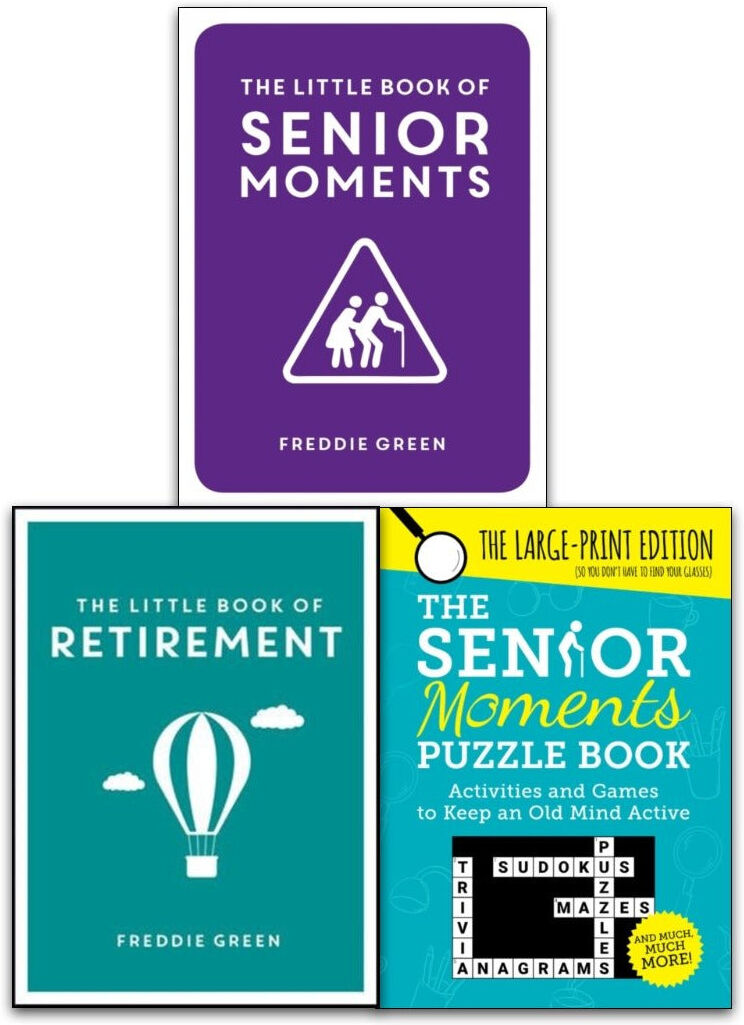
Summersdale Publishers The Little Book of Senior Moments, The Little Book of Retirement, The Senior Moments Puzzle 3 Books Collection SetTitles in the Set Are: The Little Book of Senior Moments The Little Book of Retirement The Senior Moments Puzzle Book The Little Book of Senior Moments You know you are having a senior moment when you decide it is time to pull up your socks, and realise you forgot to put any on If this sounds all too familiar, read on to discover whether your marbles just need a spring clean or you've well and truly lost them. The Little Book of Retirement You know you are retired when People from work keep phoning up asking where on earth you put important documents. The joys of retirement are many and varied, so read on to discover what makes these golden years so golden. The Senior Moments Puzzle Book Instead of wracking your brain for something to do, challenge your mind and have hours of fun with this delightful puzzle book. With everything from tricky crosswords, word searches, anagram puzzles and sudokus to simpler brain-teasers such as spot the differences, mazes and trivia questions, this large book edition means you will not even need your glasses wherever you put them.9,95 £*Shipping: 2,99 £Secure redirect to the provider
-
Perfect Picks Market Portable Outdoor Solar Fire Starter Card Credit Card Sized Fresnel Lens Survival Tool Portable Outdoor Solar Fire Starter Card Credit Card Sized Fresnel Lens Survival ToolImagine having reliable fire anywhere the sun shines without matches or fuel. The solar fire starter card is a compact, walletfriendly survival essential that harnesses the power of sunshine to ignite tinder fast. Designed for campers, hikers, and...29,97 $*Shipping: 0,00 $Secure redirect to the provider
-
What are the temperate zones in the mid-latitudes?
The temperate zones in the mid-latitudes are regions located between the Tropic of Cancer and the Arctic Circle in the Northern Hemisphere, and between the Tropic of Capricorn and the Antarctic Circle in the Southern Hemisphere. These zones experience moderate temperatures compared to the tropics and polar regions, with distinct seasons including warm summers and cool winters. The temperate zones are characterized by a variety of ecosystems, including deciduous forests, grasslands, and Mediterranean climates, making them highly diverse in terms of flora and fauna. **
-
What is the climate like in the temperate zone?
The climate in the temperate zone is characterized by four distinct seasons - spring, summer, fall, and winter. The temperatures in this zone are moderate, with warm summers and cool winters. The temperate zone typically experiences a good amount of rainfall throughout the year, which supports a variety of vegetation. Overall, the climate in the temperate zone is generally pleasant and conducive to a diverse range of plant and animal life. **
-
How are plants cultivated in agriculture in the temperate zone?
In the temperate zone, plants are cultivated in agriculture through a variety of methods. These include crop rotation, where different crops are planted in the same field in successive seasons to improve soil fertility and reduce pests and diseases. Additionally, farmers may use greenhouses or high tunnels to extend the growing season and protect plants from harsh weather. In some cases, irrigation systems are used to ensure that plants receive enough water, especially during dry periods. Finally, farmers may also use technology such as tractors and other machinery to help with planting, harvesting, and other tasks. **
-
Where is there uncertainty in the division of the temperate zone?
There is uncertainty in the division of the temperate zone primarily at its boundaries. The exact demarcation between the temperate zone and the tropical or polar zones can vary depending on the criteria used, such as temperature, climate, or vegetation. Additionally, with climate change and shifting weather patterns, the boundaries of the temperate zone may be subject to change over time, adding further uncertainty to its division. **
* All prices are inclusive of VAT and, if applicable, plus shipping costs. The offer information is based on the details provided by the respective shop and is updated through automated processes. Real-time updates do not occur, so deviations can occur in individual cases. ** Note: Parts of this content were created by AI.